Category: TECHNOLOGY AND INNOVATION
Country: United Kingdom
By Morgane Gillard
29th December, 2025
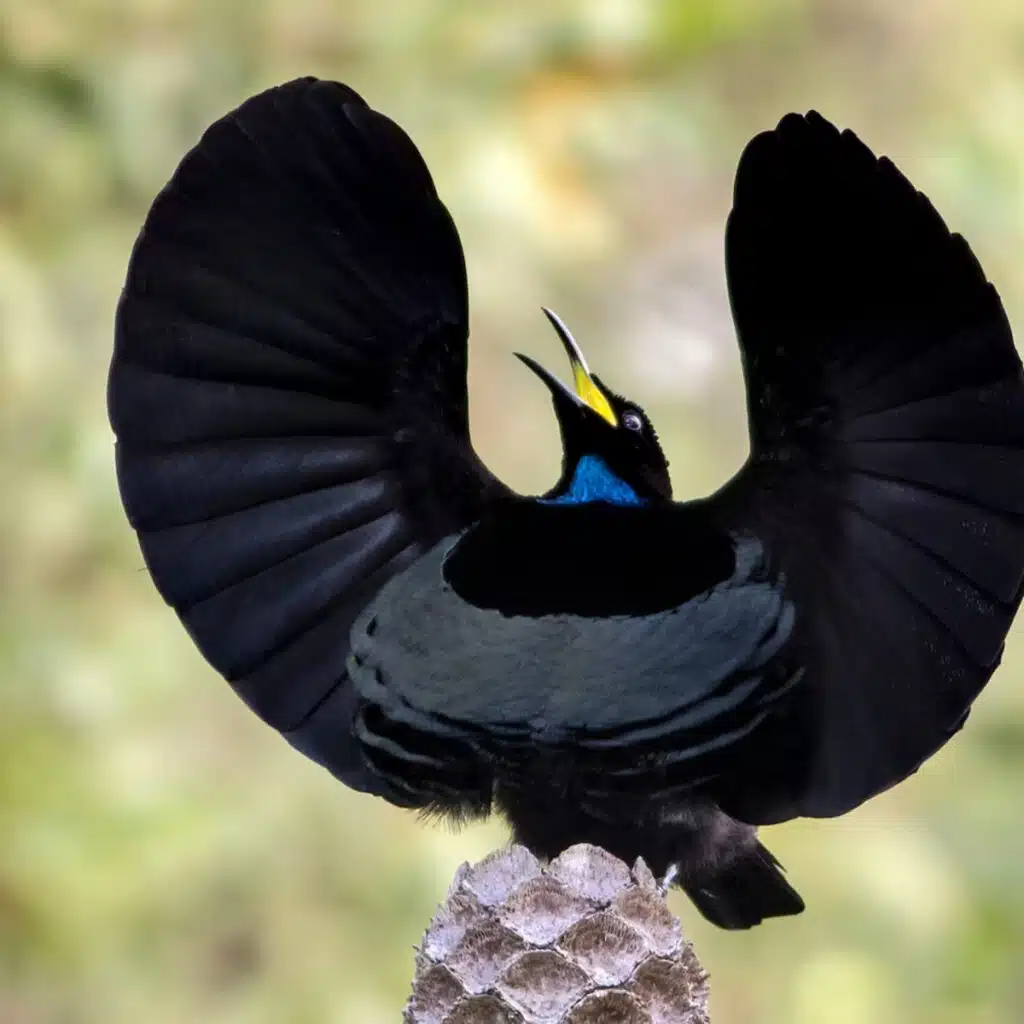
The steel-throated bird of paradise has feathers so intensely black they seem to swallow light. Inspired by this wonder of nature, scientists have developed a fabric that redefines the limits of darkness. With its nanoscale structure that captures light, it promises stunning possibilities in fashion, design, and cutting-edge technology.
We perceive color through the dance of light and matter. Sunlight contains every wavelength in the visible spectrum, but when it strikes an object, some wavelengths are absorbed while others bounce back. The ones reflected toward our eyes are what our brains interpret as color. In short, the shade we see depends on an object’s chemistry and electronic structure — the keys to which wavelengths are absorbed or reflected.
Ultrablack: almost total light absorption
Objects that absorb nearly every wavelength appear black. But not all blacks are created equal — some are far deeper than others.
The feathers of the magnificent Ptiloris magnificus, or steel-throated bird of paradise, are an exceptional case. Scientists call it “ultrablack” when less than 0.5% of light is reflected — a level of absorption that makes its plumage look like a hole in reality itself.
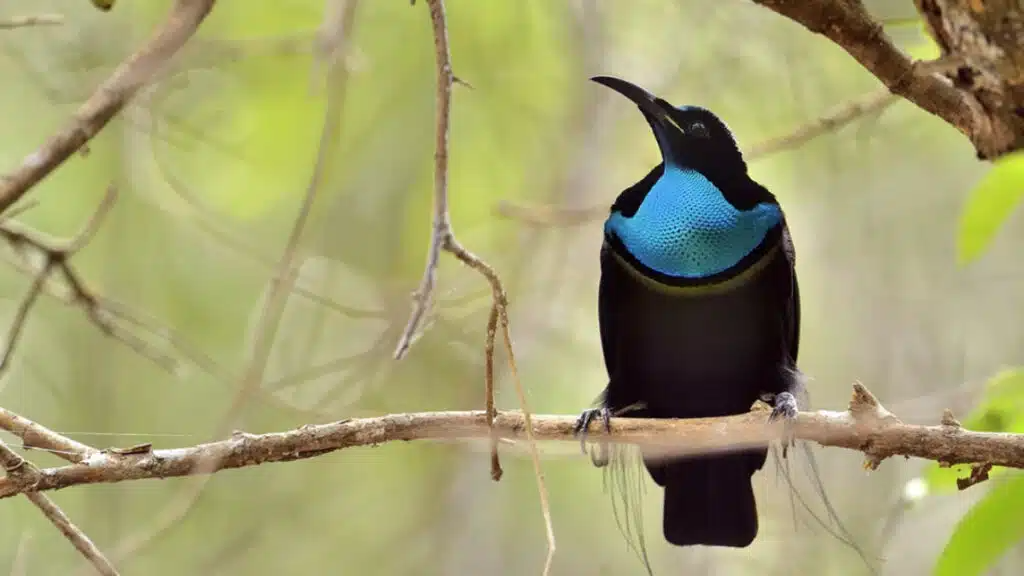
The steel-throated bird-of-paradise has inspired researchers at Cornell University. © Paul Maury, Cornell Lab of Ornithology
Studying those feathers inspired researchers to design new ultrablack textiles at a fraction of the cost of existing materials. Previous breakthroughs include Vantablack, a British invention from 2014 that absorbs 99.96% of light, and an even darker material created at MIT in 2019, which pushes absorption to 99.995%. It doesn’t get much blacker than that — or so we thought.
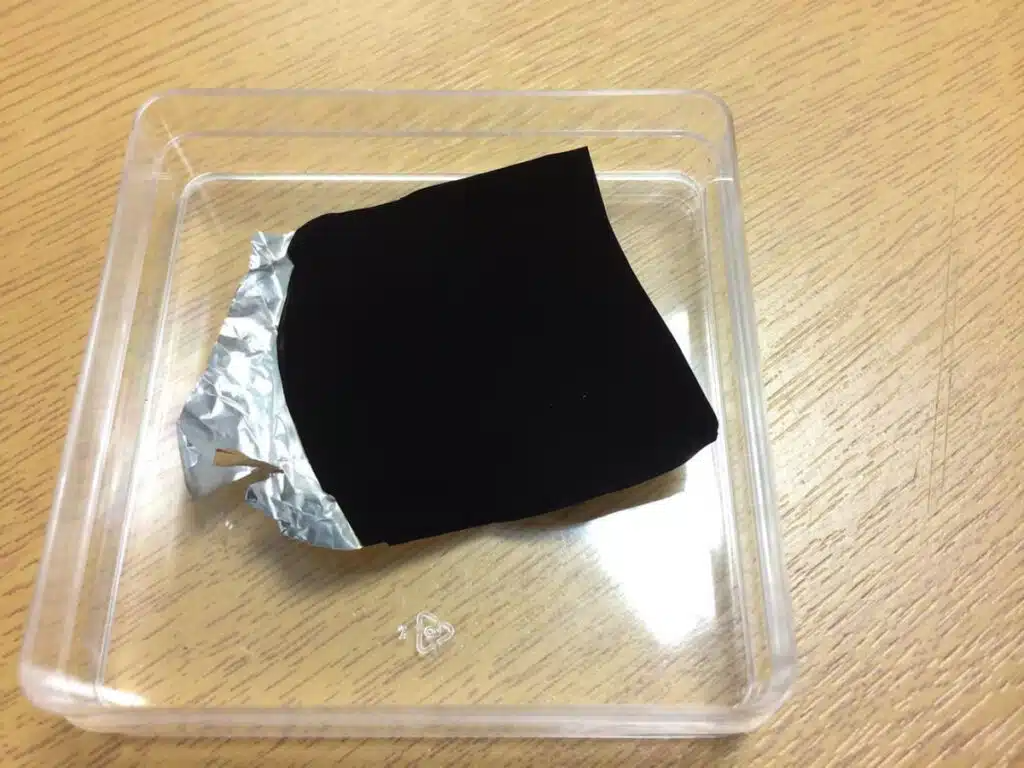
Vantablack is one of the deepest blacks ever produced. © Surrey NanoSystems, Wikimedia Commons, CC BY-SA 3.0
Nanofibrils that trap light
Producing these materials, however, is notoriously difficult and expensive. So a team from Cornell University decided to take another path. They dyed a piece of white merino wool with a synthetic melanin polymer called polydopamine, then placed it in a plasma chamber to form nanometer-scale fibrils. These microscopic fibers — modeled after the bird’s feathers — bounce light between them until it can’t escape, achieving an impressive 99.87% absorption.
“Light essentially bounces from one fibril to another instead of reflecting outward,” explained lead author Hansadi Jayamaha. “That’s what creates the ultrablack effect.” Unlike the natural feathers, which lose their depth when viewed from an angle, Cornell’s fabric keeps its rich darkness even when tilted up to 60 degrees.
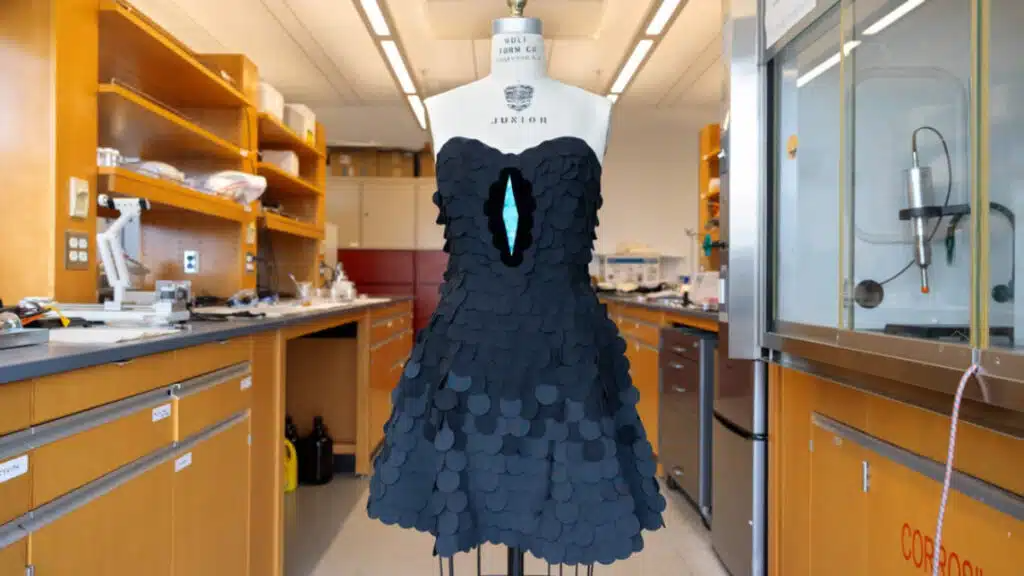
Cornell University fashion student Zoe Alvarez created a dress using several shades of black, including the new ultrablack (center). © Ryan Young, Cornell University
Endless potential applications
Beyond the world of haute couture and avant-garde design, this new fabric could transform several industries. In solar thermal systems, for example, its ability to absorb nearly all incoming light could dramatically boost heat conversion efficiency.
The researchers also envision uses in thermal camouflage, photography, imaging, optics, and astronomy. If adaptable to different surfaces, this material could line the interiors of cameras or telescopes, reducing glare and light “noise” to reveal clearer, purer images of the universe.
Courtesy: futura-sciences.com



Copyrights © 2026 GLOBAL TEXTILE SOURCE. All rights reserved.